
A Different Side of the Costa del Sol
Manilva is one of the westernmost municipalities on the Costa del Sol and offers a very different experience from the busier resort towns around Marbella, Fuengirola or Torremolinos. It sits at the point where the Costa del Sol begins to meet the Campo de Gibraltar, giving it a slightly quieter, more open and more natural atmosphere. Official municipal information places Manilva in the south-west of Málaga province, around 97 kilometres from Málaga city and around 35 kilometres from Gibraltar, making it a useful base for exploring both the Costa del Sol and the gateway to Cádiz.

Why Manilva Is Worth Visiting
Manilva is ideal for visitors who want beaches, a marina, seafood restaurants, vineyards, walking routes and Andalusian character without the intensity of the larger coastal resorts. It is not a place built around one single attraction. Instead, its appeal comes from the combination of several distinct areas: the inland village of Manilva, the coastal town of San Luis de Sabinillas, the fishing and historic area of El Castillo de la Duquesa, the marina at Puerto de la Duquesa, and natural coastal corners such as Punta Chullera. Together, they make Manilva a surprisingly varied destination for a relaxed day trip, a family holiday or a longer stay on the western Costa del Sol.
Manilva Today: A Growing Municipality
The original Costablog article from 2007 described Manilva as a town of around 11,200 inhabitants. Today, the municipality has grown significantly. The Andalusian Institute of Statistics lists Manilva with a total population of 18,044 in 2025, showing how much the area has expanded over recent years while still keeping a more low-key feel than many other parts of the coast. The same official data gives the municipality a surface area of 35.59 square kilometres and an altitude of 131 metres above sea level for the main nucleus.
The Main Areas of Manilva
Manilva is not only one town centre but a municipality made up of several population centres. Official statistical data lists the main nuclei as Alcorrín, Castillo de la Duquesa, Honda Cavada, La Chullera, Manilva and San Luis de Sabinillas. Sabinillas is the largest of these population centres, followed by Castillo de la Duquesa and Manilva village itself. This structure is important for visitors because each area has a different character and offers a different reason to visit.
Manilva Village: Vineyards Above the Sea
The inland village of Manilva is located around two kilometres from the coast and has a more traditional Andalusian feel than the beach areas below. Spain’s official tourism portal describes Manilva as being surrounded by vineyards close to the Mediterranean, which is one of the details that makes the municipality different from many coastal towns nearby. The historic village is quieter than the marina or Sabinillas, but it is essential if you want to understand Manilva beyond its beaches.
A Town Shaped by Wine and Moscatel Grapes
Manilva has a strong connection with vineyards and the cultivation of Moscatel grapes. The rolling hills around the village have long been part of the town’s identity, and wine culture remains one of the most distinctive local features. This is especially visible during the Fiesta de la Vendimia, the grape harvest festival, which is one of Manilva’s most symbolic celebrations. Turismo Andaluz describes the Vendimia as a festival that coincides with the end of the grape harvest and highlights its special character on the Costa del Sol.
San Luis de Sabinillas: The Everyday Coastal Centre
San Luis de Sabinillas, usually known simply as Sabinillas, is the most populated and practical coastal area of Manilva. It has a long seafront promenade, shops, cafés, restaurants, supermarkets and a wide beach directly in front of the town. This makes it especially convenient for families and visitors who want easy access to services without needing to drive everywhere. Sabinillas feels more local than glamorous, and that is part of its charm. It is the kind of place where people walk by the sea in the morning, stop for coffee, buy fresh bread and enjoy a straightforward Mediterranean lifestyle.
Playa de Sabinillas
Playa de Sabinillas is the main urban beach of the municipality and one of the most popular with local residents. The Town Hall describes it as the most frequented beach, located directly in front of the town and equipped with services such as showers, changing facilities, surveillance, restaurants and beach bars. The same source highlights its Blue Flag recognition, making it one of the most reliable beach choices for families and visitors looking for comfort and facilities.
Blue Flag Beaches in Manilva
In 2026, the beaches of Sabinillas and Las Gaviotas were awarded the Blue Flag, while Puerto de la Duquesa also maintained its Blue Flag distinction. According to the Town Hall, these awards recognise environmental quality, sustainable management and safety, strengthening Manilva’s reputation as a clean and well-managed coastal destination. For visitors, this matters because it gives confidence when choosing beaches, especially for family holidays or longer stays.
Puerto de la Duquesa: Manilva’s Marina Life
Puerto de la Duquesa is one of the best-known parts of Manilva and probably the area most familiar to international visitors. It is a compact and attractive marina surrounded by restaurants, bars, apartments and boats. Compared with Puerto Banús, it is much smaller and more relaxed, but it has enough atmosphere to make it a pleasant place for lunch, dinner or an evening walk. The Town Hall describes the marina area as one of the main centres of tourist activity in the municipality.
Why La Duquesa Appeals to Visitors
La Duquesa has a gentle holiday atmosphere without feeling overwhelming. You can walk around the marina, enjoy a meal overlooking the boats, have a drink at sunset or use it as a base for nearby beaches. It is popular with residents, tourists and second-home owners, especially from northern Europe. The area works well for those who want a quieter marina experience than Marbella while still having international restaurants and a social atmosphere close at hand.
El Castillo de la Duquesa
Just beside the marina lies El Castillo de la Duquesa, a small coastal area with historical importance and a more traditional feel. The Castillo de la Duquesa, also known as the Fortín de Sabinillas, was built to protect the coast near Gibraltar at a time when this anchorage had strategic military value. Today, the castle and its surroundings add a layer of history to a destination that might otherwise be seen only as a beach and marina area.
The Archaeological Heritage of El Castillo
El Castillo is not only interesting because of the fortress. The area around it has produced important archaeological finds, including materials from the Cerro del Castillo site and the Castillejos de Alcorrín site. Turismo Andaluz notes that Castillejos de Alcorrín dates back to the Late Bronze Age and was an important fortified settlement. This gives Manilva a deeper historical dimension and makes El Castillo worth exploring for anyone interested in the ancient layers of the Costa del Sol.
Playa de La Duquesa and Playa El Castillo
The beaches around La Duquesa and El Castillo combine maritime atmosphere, sand, rocks, beach restaurants and historic scenery. The Town Hall describes Playa de La Duquesa as lively and well equipped, extending from El Castillo and the Arroyo de la Peñuela area, with services such as showers, restaurants and beach bars. Playa El Castillo is described as a beach that combines chiringuitos, extensive sandy areas, rocky sections for fishing and family-friendly spaces.
Punta Chullera: Manilva’s Natural Coastal Corner
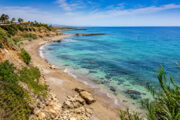
For a more rugged and scenic beach experience, Punta Chullera is one of Manilva’s most attractive areas. The Town Hall describes it as a beach of beautiful coves surrounded by rocks and low cliffs, with clean transparent waters, ecological value and peaceful natural conditions. It is very different from Sabinillas or La Duquesa because it feels wilder, less urban and more connected to the natural coastline.
Playa de los Toros
At the western edge of the municipality, Playa de los Toros offers another quiet and more natural option. The Town Hall describes it as a beach where the wild and untouched landscape dominates over noise and crowds. For visitors looking for silence, open views and crystal-clear waters, this part of Manilva can be especially rewarding. It is not the place to go if you want lots of services, but it is ideal if you prefer space and a more peaceful beach experience.
Golf Near Manilva
Manilva is also a good destination for golf lovers. Spain’s official tourism portal highlights the municipality as an excellent place for golf, and the surrounding western Costa del Sol offers several courses within easy driving distance. This makes Manilva attractive not only for beach holidays but also for longer stays during spring, autumn and winter, when golf conditions are often especially pleasant.
Food and Local Flavours
Manilva’s gastronomy reflects both its coastal and agricultural identity. Spain.info recommends trying the fresh local fish, including besugo, salmonete, mero, bonito and sardines, while the municipal beach information also points to fishing as an important part of Sabinillas’ traditional economy. This means that a visit to Manilva should include seafood, whether in a chiringuito by the beach, a restaurant in La Duquesa or a local bar in Sabinillas.
A Quieter Alternative to Marbella and Estepona
One of the best reasons to visit Manilva is its slower rhythm. Marbella is more glamorous, Estepona is more polished, and Fuengirola is more urban, but Manilva offers something quieter and more spacious. It still has tourism, international residents and holiday apartments, but it has not lost the feeling of being a coastal municipality with several different identities. For many visitors, that makes it more authentic and easier to enjoy at a relaxed pace.
Visiting Manilva as a Day Trip
Manilva works well as a day trip from Marbella, Estepona, Sotogrande or even Málaga if you do not mind the drive. A good day could begin in Manilva village, continue down to El Castillo and the archaeological area, include lunch at Puerto de la Duquesa and finish with a beach walk in Sabinillas or Punta Chullera. This gives you a complete sense of the municipality: inland village, history, marina, beach and natural coastline.
Staying in Manilva
For a longer stay, Manilva suits visitors who prefer a quieter base. It is especially attractive for families, couples, golfers, remote workers and travellers who want access to the western Costa del Sol without being in the middle of Marbella’s busiest areas. Sabinillas is practical for everyday life, La Duquesa is ideal for marina atmosphere, El Castillo feels more traditional, and the more residential areas around La Chullera and Alcorrín offer sea views and calm surroundings.
How to Get to Manilva
Manilva is best reached by car, especially if you want to move between the village, Sabinillas, La Duquesa and Punta Chullera. The municipality is connected by the A-7 coastal road, making it easy to reach from Estepona, Marbella, San Pedro de Alcántara, Sotogrande and Gibraltar. Public transport is possible, but a car gives far more flexibility, particularly if you want to explore the beaches and viewpoints outside the main built-up areas.
Best Time to Visit Manilva
Manilva can be visited year-round, but spring and autumn are especially pleasant. During these seasons, the weather is warm enough for beach walks and outdoor dining, but the area feels calmer than in high summer. July and August bring more visitors and a livelier atmosphere, especially around La Duquesa and Sabinillas. September is particularly attractive because it combines warm sea temperatures with the grape harvest season and local traditions.
Is Manilva Worth Visiting?
Manilva is absolutely worth visiting if you enjoy quieter coastal destinations with a mix of beaches, history, food and local character. It may not have the name recognition of Marbella or the renovated old-town charm of Estepona, but that is exactly why many people like it. It feels more understated, more spread out and more peaceful. For visitors who want to discover a different corner of the Costa del Sol, Manilva offers plenty of reasons to stay a little longer.
Final Thoughts
Manilva is one of the most interesting municipalities on the western Costa del Sol because it combines several worlds in one place. There is the traditional village surrounded by vineyards, the everyday coastal life of Sabinillas, the marina atmosphere of La Duquesa, the historical setting of El Castillo and the natural beauty of Punta Chullera. It is a destination that rewards slow exploration rather than quick sightseeing.
For anyone looking beyond the usual Costa del Sol hotspots, Manilva offers an authentic and relaxed alternative with enough beaches, restaurants, history and scenery to make it a memorable stop.







One Comment
puerto de la duquesa, costa del sol, spain
Great blog, hope you don’t mind me posting a link back to mine about Puerto Duquesa:
http://puertoduquesa.blogspot.com