On 21 September, AEMET, Spain’s state weather agency, confirmed that summer 2026 was the hottest since its official records began in 1961, and the hottest since at least 1869 in its own historical reconstruction. The average across mainland Spain reached 24.5°C, which is 2.4°C above the 1991 to 2020 norm. Our long-stay guide asks whether you really need a car on the coast. If the answer is yes, that is the kind of summer a car on the Costa del Sol has to survive.
Whether you drove down from northern Europe or bought a second-hand car after you landed, a garage visit before the first hot season is worth planning. Booking it in spring is far easier than dealing with a breakdown on the A-7 in July.
Why does the first summer matter so much?
Heat works slowly on rubber, fluids and batteries, and the damage isn’t always obvious.
AEMET also counted 61 days under heatwave conditions across mainland Spain and the Balearic Islands in 2026, a record that is well above the 41 days of 2022.
The checklist below starts with the tyres and ends with the paperwork that protects you afterwards.
| Check | Figure | Source |
| Tread depth | 1.6 mm legal minimum, change below 3 mm | ADINE in the DGT magazine |
| Tyre pressure | about 0.1 bar per 10°C, check cold | TodoEnRecambio |
| Brake fluid | change every 2 years | Somosmotor |
| Coolant | change every 2 years | Todomecanica |
| Repair warranty | 3 months or 2,000 km | Royal Decree 1457/1986 |
Are the tyres ready for the heat?
Start with the tread. The legal minimum is 1.6 mm. ADINE, the association of tyre distributors and importers, recommended changing tyres once the tread drops below 3 mm in a 2020 article in the magazine of the DGT, Spain’s traffic authority. The same article puts the fine for driving under the legal limit at 200 euros.
Then look at the date. The code that starts with DOT on the sidewall ends in four digits that give the week and the year the tyre was made. Spanish rules don’t set a maximum age, according to the retailer Tuneumatico, so an old tyre with plenty of tread is a judgement call best made with a mechanic.
Pressure matters just as much. According to the retailer TodoEnRecambio, it rises roughly 0.1 bar for every 10°C. Always check it cold, after less than two kilometres of driving, and never let air out of a hot tyre that reads too high. With the car loaded for a holiday, use the figure in the loaded column of the pressure label. The label is usually on the door pillar or inside the fuel flap, and the loaded figure is typically 0.2 to 0.4 bar higher.
What should you check on the brakes and cooling?
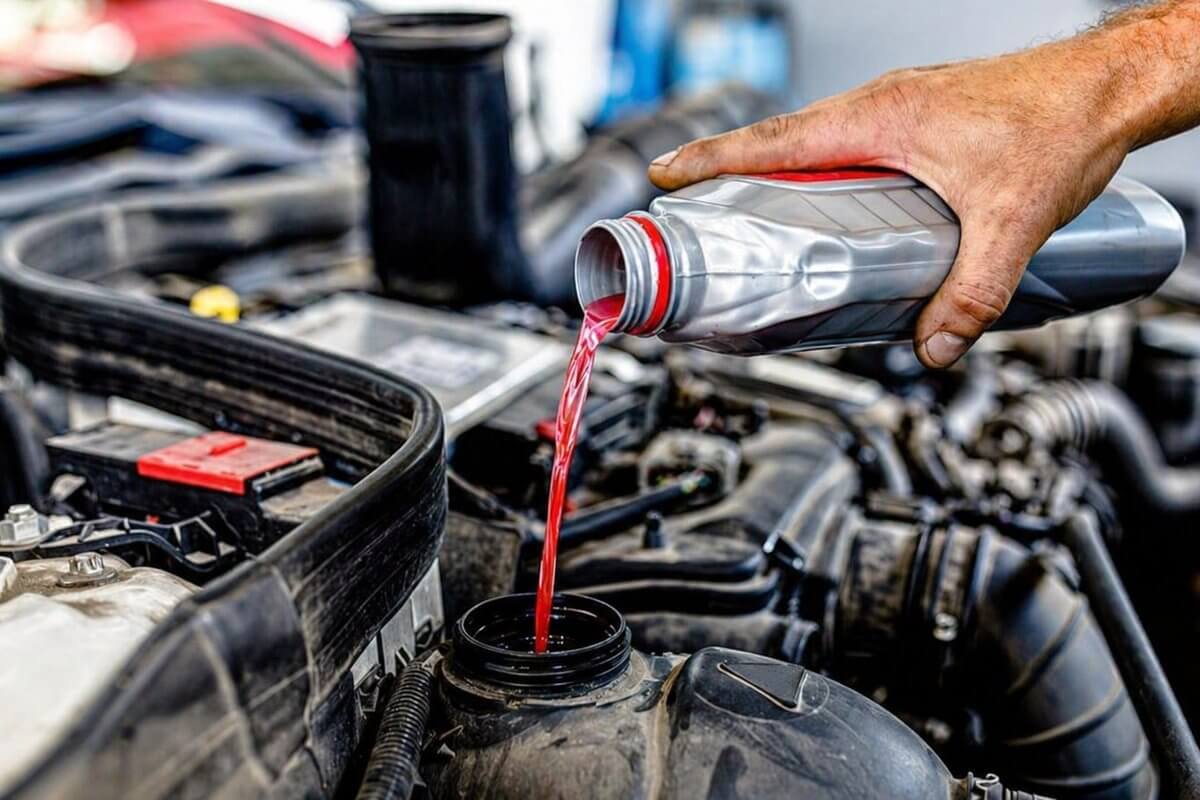
Brake fluid absorbs moisture from the air even when the car is parked. Almost every manufacturer sets two years as the interval for changing it, according to the motoring site Somosmotor, and the car manual has the final word. Fluid with water in it boils at a lower temperature, and a boiling fluid leaves the pedal soft exactly when a long descent needs it.
The cooling system is next. The Spanish motoring site Todomecanica suggests changing the coolant every two years and checking the hoses and belts for wear or leaks.
Is the battery still strong enough?
In August the RACE, Spain’s royal automobile club, explained that heat speeds up the chemical reactions inside a car battery and can bring forward its ageing. The damage can go unnoticed while the car still starts, and show up months later when the cold arrives. The RACE advises checking the battery before summer trips, above all if it is more than a few years old.
Does the air conditioning really matter?
Anyone who has sat in a car parked in the sun in Marbella knows the answer. If the air isn’t cold enough, Todomecanica says the system may need a gas recharge or may have a compressor problem, and it advises a full check at a specialist garage before temperatures climb.
A mechanic quoted by the Spanish site Motorpasión adds that the gas isn’t used up like fuel, so a system that needs topping up has a leak. Ask for the circuit to be checked and the cabin filter to be looked at, not only for a top-up. One owner in a Forocoches thread notes that the leak may be in a cheap fitting or hose or in a costly evaporator or compressor seal, which is why the cause comes first.
What about headlights if the car comes from a left-hand traffic country?
A British dipped beam is shaped for traffic that keeps left. On Spanish roads, where traffic keeps right, the same pattern points glare at oncoming drivers.
The adhesive beam deflectors sold for holiday trips are a temporary fix for tourists, according to a Caralyze guide from August, and they aren’t accepted by the ITV, Spain’s equivalent of the MOT, when a car is being registered. If the car will stay, the beam pattern needs a permanent correction, not a sticker. The site Upsticks, which publishes ITV advice for right-hand-drive owners, says halogen units usually have to be replaced, while some xenon and LED units can be switched.
What should a garage put in writing?
Spanish rules help you here. Royal Decree 1457/1986, which governs repair workshops, gives every customer the right to a written quote that stays valid for at least twelve working days and lists the price broken down. The invoice must itemise the work, the parts and the hours.
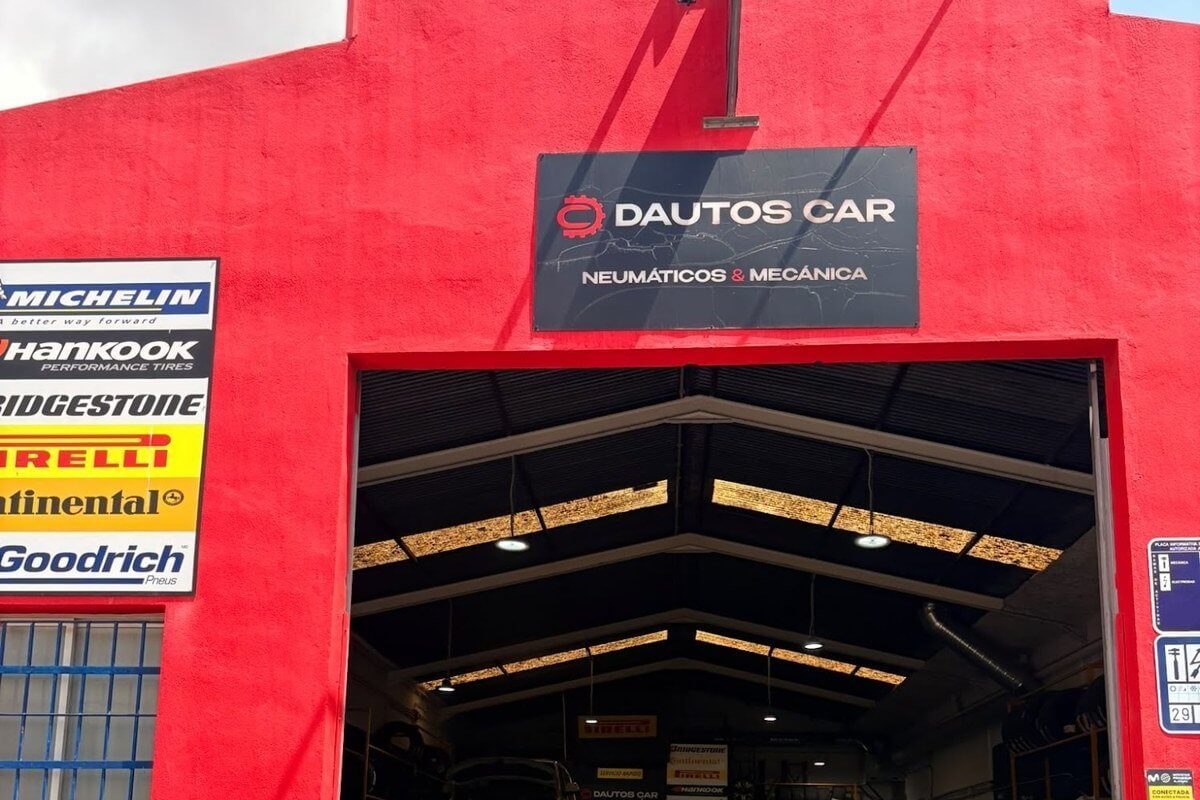
Ask for those two documents even for a simple service. Any workshop is obliged to provide them. Dautos Car in Marbella, on the La Ermita industrial estate, lists quick servicing, oil changes, tyres, alignment, suspension and air conditioning recharges on its website. Whichever garage you choose, ask for each job to be quoted separately.
What if something fails after the work?
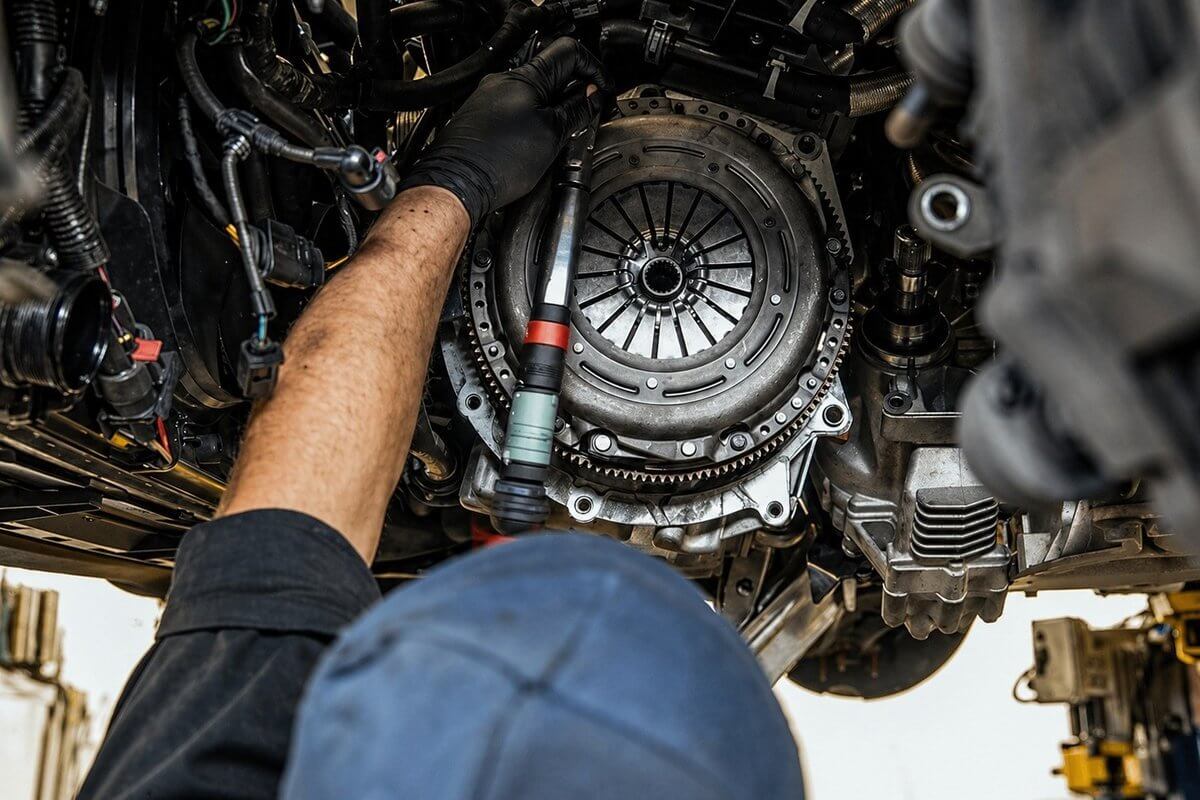
Go back to the same garage. Under the decree, every repair is guaranteed for three months or 2,000 kilometres, whichever comes first. The warranty covers parts and labour and stays valid as long as nobody else has worked on the car.
Keep the invoice as proof of the work, because the three months run from the day you collect the car. Write down the mileage on that day too, and describe any symptom in writing so there is no doubt about what you reported.